Sunday, February 28, 2016


I STAND WITH JNU
JNU has rightly or wrongly been implicated as a leftist den. It is true that the Left ideology had an upper hand there with the many shades of Marxists, Trotskyites, Maoists and numerous other strands of Leftism being professed and practiced there. But then we had the free thinkers, the extreme Right wing, the Congress and many other groups too. There were also the eternal rebels and perpetual dissenters against the system who too co-habited with others. The institution always provided enormous space for critical thinking and dissent. That was the basic value we proudly inherited from JNU.

At present, the students and the teachers in JNU are leading a historical struggle and hence I believe that it is the duty of every jnuite, every liberal to speak up for the JNU community who are fighting for the fundamental democratic rights of the citizens in this country. I write this, keeping my head high and with a deep sense of pride that the institution instilled in me some years ago.  If one borrows the expression of Sartre, one who does not speak at the time of turbulence consents.  So I speak.

I entered JNU as a student in the School of International Studies in 1987. I had belonged to one of those lower middle class families in Kerala and it was my greatest dream to get into JNU; and more than me, it made my teachers in Sri Kerala Varma College, Thrissur, happy and proud. I arrived in the campus on a hot, hostile day of July that year; looking at the dry branches of the trees in the scorching sun, I thought of going back to Kerala, my comfort zone. What added to my misery then was my poor communication skills in English and the spoken Hindi was indeed an alien language to me.  However, I could overcome these challenges soon, thanks to my understanding  teachers (they always treated the students from rural areas with special attention- Narayan Das, G P Deshpande and many others) and others around. A senior from my Centre, whom I did not know at all, helped me; I came to know his name only later – Vikram Rao (now a bureaucrat) and he was the one who prepared me for the interview. He literally acted a mentor for me. And indeed it helped in the interview immensely.

I learned the most important lesson about the political culture of JNU on the day of the Bharat Bandh, in 1988; against the Rajiv Gandhi government that was then embroiled in the Bofors scandal. The Left organisations in JNU had decided to join the Bandh and I was too enthusiastic about my first exposure to Delhi politics. We approached the canteens in the campus and requested those who ran them to close down as a mark of their solidarity. However, in the School of Social Sciences canteen, a NSU (I) leader sat alone and kept on ordering tea, one cup after another, so that they will not be able to close the place.  He did not heed to our request. I took his cup of tea and poured it down the washbasin and asked him to get out. He was stunned and speechless and left the place. However, I was called to the students union office that evening and the union leaders told me politely; “comrade this is not the way we conduct protests in JNU, we ENGAGE the opposition in a debate. You are very new here, but you will learn the ways of JNU soon”.

Yes. I had learnt the JNU ways soon.  The lecture classes in the mornings in the various centres across the schools (sometimes we attended classes of teachers like Prabhat Patnaik who never asked as to whether we belonged to the Economics Centre), library hours in the afternoons and the long evening sessions in the Ganga Dhaba with Nimbu pani and chai did teach me a lot and made me what I am today. We engaged in debates and discussions on a whole range of issues -- national and international. Sessions were there on theories and praxis.  There were arguments and counter- arguments but none turned violent. End of the sessions, somebody who was drawing a fellowship/scholarship ordered some tea and sometimes bun-andas (the best cuisine available in the Ganga Dabha those days and Tejbir, who ran that dhaba was a magician who could produce at least six large glasses of lemon juice from a single lemon).

JNU had always provided space for diverse thoughts. From left to centre to right, people visited JNU and presented their views before us. These were mostly conducted in the dining halls of the various hostels after dinner time. Of course so many uncomfortable questions were asked to whoever spoke there. When the EPRLF leaders Padmanabha and Varadaraja Perumal visited the campus, just before Padmanabha was the assassinated by the LTTE in Madras in 1988, the students raised many questions about the internal fights among the Tamil groups in Sri Lanka; and some of them were LTTE sympathizers.  The BJP’s Uma Bharathi too came for a public meeting on sati. Questions were raised to her too but the campus did not witness any kind of violence even if the views of the visitors were ultra-right,   fascist or divisive.

When Sitaram Yechury, the most convincing spokesperson of the CPI(M), visited JNU after the Tiananmen square  killings in China to justify it, there were a volley of questions raised against the stand of the Party and I was pro- (Chinese) students who were fighting for democracy. That’s what JNU made me -- from being a hardcore rigid Marxist to a Liberal Marxist -- over a period of time.

Now, we are living in bad times. An undeclared emergency prevails over and it is worse than the 1975 emergency. It brutally enters into our private space and lives and decides for us what we should eat, what we should wear, what should we speak. The line between a ‘national’ and anti-national is thinning down. A day has come when we have to tell our young children to watch out what you are speaking; and to watch out to whom you are speaking.

This is too bad. The silver lining is that there are some sane voices. When solidarity for the fighting JNU students are pouring in, I believe it is my humble duty to express my solidarity with them and tell the young fellows, some of whom are even risking their lives for protecting democratic rights of the people, that I am with you; we are with you.

An open appeal to the JNU VC. From the legendary G. Parthasarathy to Prof Sapory from whom you took over JNU, they had all defended and upheld the democratic tradition of JNU and provided space for the students to express their views fearlessly and openly; PLEASE you should not follow the steps that P.N.Srivastava took (in 1983) when he called police into the campus and allowed over 300 students to be taken to the Tihar jail. Let JNU treat that an aberration. History will not absolve you.


Sunday, October 5, 2014


The breathtaking Gurudongmar Lake (17500 ft) in North Sikkim. It is worth visiting though some people suffer at high altitude. We did not face any problem. Popcorn and ginger must have helped to overcome the altitude problem.

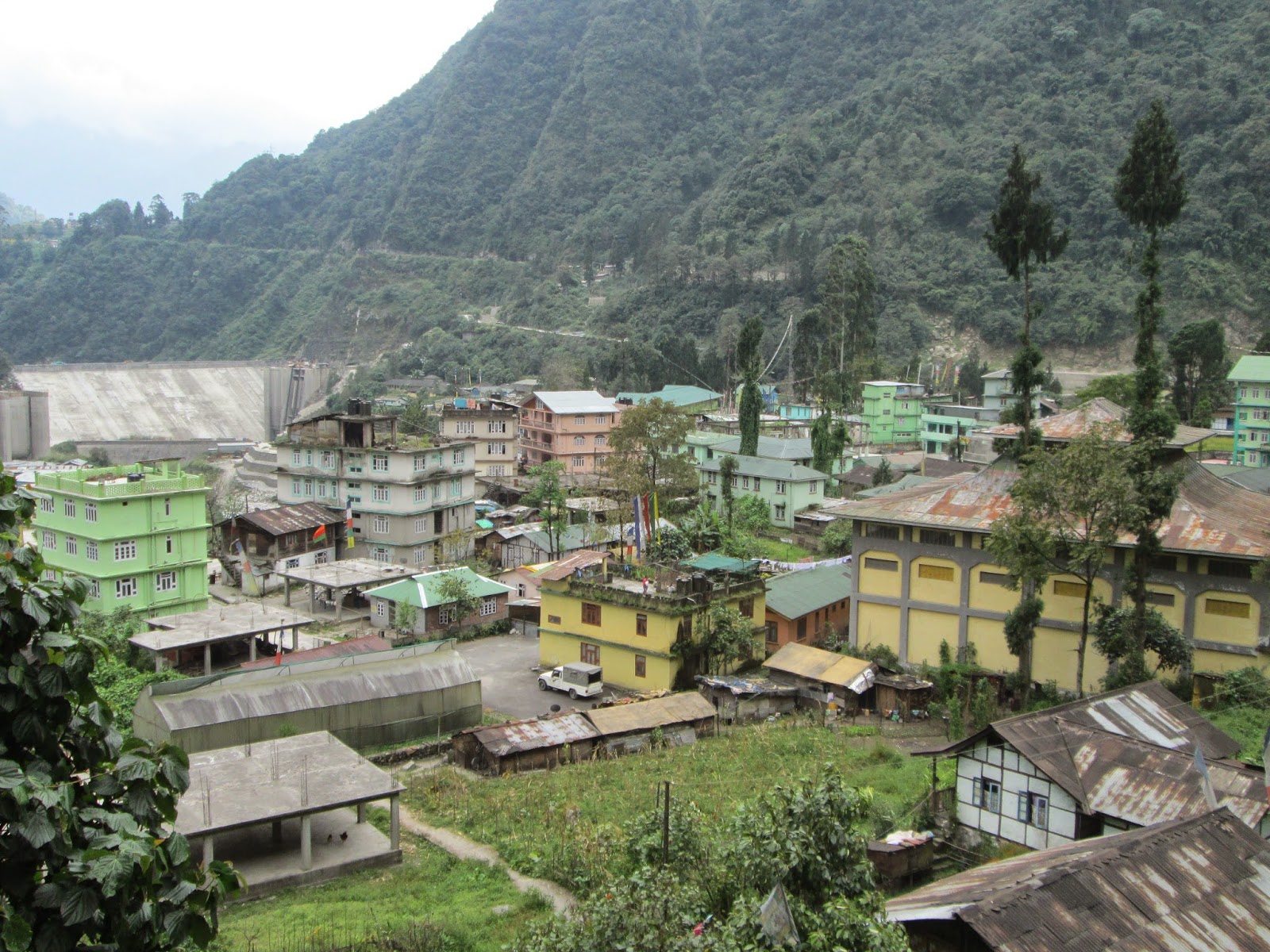
All in the name of Development! This dam Dam will erase the memory of Chuntang, a small town at North Sikkim, forever! Is it a crime that their habitat is situated at the confluence of two rivers- Lachen River and Lachung River? People are protesting but who cares


Friday, August 8, 2014

Student unrest signals maturing of democracy

DNA, Published Date:  Aug 07, 2014
Erinjiyal K Santha
Gangtok witnessed violence involving students and the police. National Highway 31A leading to our borders with Tibet (Nathu La) remained blocked for a couple of days and there were bursts of tear-gas shells many times to open up the passage. The unrest is a matter of concern for the region’s students as well as people. Strikes and blockades were not commonplace in this part of the country. Compared to other North-Eastern states, Sikkim, generally known to be peaceful, has been witnessing disturbances since the last elections in May 2014. Two people had lost their lives in election-related violence, which is uncharacteristic of Sikkim’s politics.
On July 14, students of Sikkim Government College, Tadong in Gangtok, protested against fee hike by blocking National Highway 31A. The hike was unjustified as the government, in one stroke, increased the semester fee from Rs300 to Rs1,700. The government’s justification was that a hike in tuition fees had been kept in abeyance for several years.
The Sikkim government college in Tadong is the first college to have come up in the state; it was established in 1977, as a night college, after the merger of Sikkim with the Indian Union in May, 1975. Prior to that, students had to go to colleges in Darjeeling and other parts of West Bengal; those who had money could land up in Delhi. Access to higher education was the preserve of those who could spend money on travel and live in hostels outside of Sikkim.
On July 14, the day when the academic session began, students from the Government College marched to the Ministry of Human Resources Development, demanding a repeal of the fee hike. The officials were not in a mood to entertain the frustrated students who resorted to road blockade; this indeed is an effective means of protest as it is the only main highway to the capital and the Government College in Tadong is right on the National Highway! Gangtok, in any case, is on either side of the highway, and there aren’t many roads in the city.
The peaceful protest turned violent when the police, equipped with state-of-the-art protective gear asked them to disperse. A skirmish followed. And then there was a lathicharge and bursting of tear-gas shells. Though the fee hike was revoked, later in the evening, the blockade continued on day two as well and more students joined the strike from other government colleges in Sikkim. As is the case with unrest of this kind, the demand shifted from withdrawing the fee hike to action against the Superintendent of Police, Manoj Tiwari. ‘Action’ meant different things to different sections of the students. Some wanted his dismissal while others demanded that he apologise at the same spot where he ordered the lathicharge.
Though it looked to be a spontaneous protest, the fact is that the entire development had to do with the political culture building here over the last few months. The ruling Sikkim Democratic Front (SDF), after having held all the assembly seats until May 2014, has now lost as many as eight out of the ten constituencies around Gangtok to the Sikkim Kranthikari Morcha (SKM). This is a new party, founded only a year ago and led by PS Golay, a close aide of SDF supremo, Pawan Chamling, for several years. Golay was leading the SDF’s student and youth wing until he fell out.
This explains the involvement of students as well as a section of the youth and taxi drivers in organising the blockade. Many of them had been under arrest leading the union to call for a strike.
People are apprehensive of this unrest and intolerance. However, this could be an indication of a maturing democracy with a strong opposition. This might be the beginning of a transition from a culture of monarchy to that of a democracy. Though these are still early days!


I Miss you


Pettama (my grandma) is no more. She was the most beautiful person I had ever met in my life; less complicated and more lovable! I wanted her to die in last August because i loved her and still I love her so much. She was healthy then; walking around like a soothing wind. Except for some hearing problem, she was in her usual spirit. She deserved a better death than suffering almost a year, depending on others for everything. She was a changed person then.

I saw her in last December, and then she hardly remembered me. I had waited for a long time searching for a speck of memory revisiting her. I cried hard from the realisation that we lost each other for ever. I loved her so much and still I love her.

She was a person who easily laughed and easily cried on somebody’s sufferings. She had less grey hairs for her age and was thin and elegant. Rajan, my twin brother, teasingly called her Simren, the gorgeous Tamil actress.

She had had a bad childhood, she told us once, nothing much to eat and she had been an agriculture worker before her romantic whirlpool marriage with a middleclass man. She had always maintained that it was a one sided love story; he even tried to break in her house to convince his profound love for her.

Married to a revolutionary was not easy those days, however romantic it was! Activities of the Communist Party of India were banned those days and her husband, my grandpa (whom I have seen only as a framed picture on the wall) was a ‘courier’ with the party then. He participated in a direct action along with the coir workers under the instruction of the party. He died (was killed) soon due to police torture, leaving six years marriage, three children of five, three and a year old and a 25 year old widow.  She took up every odd job to take care of the children. Once pointing at an old building in Trichur Town, she told me, you know Ammu, I carried stones up during the construction of that building. She said it a matter of fact not in a compliant mode. She never does. That is why she was different.

Then on, life was struggle for her; however she never carried it on her face. She had little worries (that’s what we thought) and few wrinkles on her face. She always was lively and we had never felt the so called generation gap between us. That was there between her daughter (my mother) and us. Regular scolding and occasional beatings (it would have been often it not for the interference our great grandfather) reminded us that she was our mother patriarch and we are the wards.

“Did you go to school, Pettama”, once we asked her. She replied smilingly, yes, when it rained in the evenings I and the cattle used to take refuge in the village school compound. But she was an eager listener and learner and used to pick up few English words from us and use it inappropriately. Once she said that “ aa pashuvum ee passuvum tammil vallya distance illa”! What she meant was that there is not much difference between the two cows. We used to laugh at her, she too laughed with us.

I can go on writing about her; fond memories of her. During the study holidays, for days she used to sit with me while I am studying, even in the middle of the nights making me black tea. Like a shadow she was there. And the way she used to talk to a snake, a rare visitor. She would ask the snake to go away, “we have given your share, don’t you remember (she was reminding the snake about the last year’s naga pooja offerings). Now don’t scare the children, go away”! She also used to talk to her cows; you believe it or not cows used to listen to her!

 Now she has left and I know she has to go; she suffered enough for a year. However, she left me the fragrance of her chandriaka soap and a lot of memories.