Sunday, April 24, 2016

Pyrotechnics of populism

Thu, 21 April 2016, Daily News Analysis  

The temple tragedy at Paravur in the Kollam district of Kerala, which left over 110 people dead and around 400 injured, raises some serious questions beyond the massive tragedy itself. Right now, the feelings of loss and the sorrow of the bereaved families hang heavy in the air but this will be forgotten soon. An array of festivals awaits Kerala in the months of April and May, before the arrival of the monsoon in June. There are indications that the insane and incomprehensible ‘sound and fury’ of the fireworks will be repeated in mega festivals like the iconic Thrissur Pooram, unless the authorities do some serious thinking and impose restrictions of some sort. The Devaswom Board authorities in Thrissur spoke in terms of the security measures that had talked of ensuring a safe fireworks display on April 17, and it did pass off quietly. There was however not a word about cutting down on the fireworks display. When a tragedy of such intensity, as the one at Paravur, strikes, politicians — national and state level — compete with each other to visit the victims and even the public will discuss it for some time to come. However, in Kerala, temple festivities and other large-scale religious events should be seen in a different light.

This issue should be placed in the broader context of religious revivalism in Kerala; a strong tendency being perceptible in the last few decades which is contrary to the so-called Kerala Model of development. Indulging in reminiscences has become a norm and as a part of this exercise, defunct rituals and rites have been ‘reinvented’ and revived. The new trend is the revival of the religious institutions of all sorts — from the nonexistent Tharavdu temples to dilapidated structures. Unfortunately, there are many takers for this in Kerala society. The festivals, which include all the religious communities, are the platform to display respective strengths and a sense of solidarity. One of the major factors responsible for revivalism is the prominent role of caste and religious organisations in the social and political realms. Caste-based organisations are not new to Kerala polity. Historically, they emerged as organisations of reformation in the early 20th century. However, in the present day context, their role is mostly reactionary and thus their contribution to revivalism is enormous. The political parties, including the Left, have not only failed to curb the growth of communal organisations, but they also succumb to the pressure of these organisations.

Yet another factor is that temple festivals are no longer confined to a village or a locality as it was in the past. Back then the households of the village shared the expenses of the festivities through cash and kind. For instance, a measure (para) of paddy or some money, proportionate to the capacity of the household, was collected by the temple authority in person. In contrast, temple festivals are mega affairs today with corporate houses stepping forward to sponsor the event. The huge hoardings of jewellery, textile and other large business chains displayed prominently at temple premises during festivals announce their indomitable presence in these festivals. Along with these, the expatriate-remittance-contributed wealth has also added to the scale of an extravaganza. They bring an element of competition among the village festivals. Year after year, the competition gets fiercer, with the display of fireworks becoming an integral component of this competitive fervour.

There is no check on the amount of money spent on these extravagant events. There were “stringent” orders from the administration on the stipulated amount of the pyrotechnic materials that could be used by the temple authority during the festivals. But it is common knowledge that the orders are blatantly violated. In the Puttingal temple, the reports say that the fireworks began around midnight and it continued till 3:30am, when the explosion happened. Despite four hours of fireworks, 30 per cent of the material was still unused and stored in the shed, which caused the devastating explosion and the massive fire. According to some newspaper reports, the temple authorities claimed that the fireworks amounting to only Rs10 lakh was used in Puttingal. Even individual households celebrating Diwali know the forbidding expenditure of bursting even a few minutes of firecrackers.

Considering the duration that the fireworks display went on before the mishap occurred, this clearly indicates that the amount quoted by the temple authorities is just a fraction of the actual amount spent. Hopefully, the inquiry will bring monetary aspects of festivals to public knowledge.

With religious groups becoming a vote-bank, political parties from the Right to the Left fear that the proposal for a total ban of fireworks will affect their vote-gathering power. In Kerala, with elections around the corner, no party would consider such steps. Hence, the discourse is on security measures or on the reduction in the use of explosive materials. The authorities’ talk reflected this attitude in their discussions in the arrangements they made at the Thrissur Pooram. The cordoning off of the venue of the fireworks display to keep devotees at a safe distance is the main concern now. Lost in this collective complicity are the voices of sane individuals. In the case of the Paravur fireworks, the sole voice of protest came from an 80-year-old local woman, Pankajakshi Amma, whose house, in the vicinity of the temple, suffered damages every year during the temple festival. There were also oral complaints that the high-decibel noise pollution disturbed the aged and the children immensely. Apparently, Pankajakshi’s family stays away from home during the festival. She registered a complaint with the district authority against the massive use of fireworks during the festival but was threatened by the organisers for complaining. The district administration, after a discussion with the concerned authorities, acted upon her complaint and the Additional District Magistrate denied permission to the competitive fireworks. The rational minds were silenced and the fireworks display was allowed to take place at the last minute and an avoidable tragedy took away so many lives. With religious fervour rising to a crescendo, it will be difficult to avert such tragedies unless the voices of rationality are heard.

Sunday, February 28, 2016


I STAND WITH JNU
JNU has rightly or wrongly been implicated as a leftist den. It is true that the Left ideology had an upper hand there with the many shades of Marxists, Trotskyites, Maoists and numerous other strands of Leftism being professed and practiced there. But then we had the free thinkers, the extreme Right wing, the Congress and many other groups too. There were also the eternal rebels and perpetual dissenters against the system who too co-habited with others. The institution always provided enormous space for critical thinking and dissent. That was the basic value we proudly inherited from JNU.

At present, the students and the teachers in JNU are leading a historical struggle and hence I believe that it is the duty of every jnuite, every liberal to speak up for the JNU community who are fighting for the fundamental democratic rights of the citizens in this country. I write this, keeping my head high and with a deep sense of pride that the institution instilled in me some years ago.  If one borrows the expression of Sartre, one who does not speak at the time of turbulence consents.  So I speak.

I entered JNU as a student in the School of International Studies in 1987. I had belonged to one of those lower middle class families in Kerala and it was my greatest dream to get into JNU; and more than me, it made my teachers in Sri Kerala Varma College, Thrissur, happy and proud. I arrived in the campus on a hot, hostile day of July that year; looking at the dry branches of the trees in the scorching sun, I thought of going back to Kerala, my comfort zone. What added to my misery then was my poor communication skills in English and the spoken Hindi was indeed an alien language to me.  However, I could overcome these challenges soon, thanks to my understanding  teachers (they always treated the students from rural areas with special attention- Narayan Das, G P Deshpande and many others) and others around. A senior from my Centre, whom I did not know at all, helped me; I came to know his name only later – Vikram Rao (now a bureaucrat) and he was the one who prepared me for the interview. He literally acted a mentor for me. And indeed it helped in the interview immensely.

I learned the most important lesson about the political culture of JNU on the day of the Bharat Bandh, in 1988; against the Rajiv Gandhi government that was then embroiled in the Bofors scandal. The Left organisations in JNU had decided to join the Bandh and I was too enthusiastic about my first exposure to Delhi politics. We approached the canteens in the campus and requested those who ran them to close down as a mark of their solidarity. However, in the School of Social Sciences canteen, a NSU (I) leader sat alone and kept on ordering tea, one cup after another, so that they will not be able to close the place.  He did not heed to our request. I took his cup of tea and poured it down the washbasin and asked him to get out. He was stunned and speechless and left the place. However, I was called to the students union office that evening and the union leaders told me politely; “comrade this is not the way we conduct protests in JNU, we ENGAGE the opposition in a debate. You are very new here, but you will learn the ways of JNU soon”.

Yes. I had learnt the JNU ways soon.  The lecture classes in the mornings in the various centres across the schools (sometimes we attended classes of teachers like Prabhat Patnaik who never asked as to whether we belonged to the Economics Centre), library hours in the afternoons and the long evening sessions in the Ganga Dhaba with Nimbu pani and chai did teach me a lot and made me what I am today. We engaged in debates and discussions on a whole range of issues -- national and international. Sessions were there on theories and praxis.  There were arguments and counter- arguments but none turned violent. End of the sessions, somebody who was drawing a fellowship/scholarship ordered some tea and sometimes bun-andas (the best cuisine available in the Ganga Dabha those days and Tejbir, who ran that dhaba was a magician who could produce at least six large glasses of lemon juice from a single lemon).

JNU had always provided space for diverse thoughts. From left to centre to right, people visited JNU and presented their views before us. These were mostly conducted in the dining halls of the various hostels after dinner time. Of course so many uncomfortable questions were asked to whoever spoke there. When the EPRLF leaders Padmanabha and Varadaraja Perumal visited the campus, just before Padmanabha was the assassinated by the LTTE in Madras in 1988, the students raised many questions about the internal fights among the Tamil groups in Sri Lanka; and some of them were LTTE sympathizers.  The BJP’s Uma Bharathi too came for a public meeting on sati. Questions were raised to her too but the campus did not witness any kind of violence even if the views of the visitors were ultra-right,   fascist or divisive.

When Sitaram Yechury, the most convincing spokesperson of the CPI(M), visited JNU after the Tiananmen square  killings in China to justify it, there were a volley of questions raised against the stand of the Party and I was pro- (Chinese) students who were fighting for democracy. That’s what JNU made me -- from being a hardcore rigid Marxist to a Liberal Marxist -- over a period of time.

Now, we are living in bad times. An undeclared emergency prevails over and it is worse than the 1975 emergency. It brutally enters into our private space and lives and decides for us what we should eat, what we should wear, what should we speak. The line between a ‘national’ and anti-national is thinning down. A day has come when we have to tell our young children to watch out what you are speaking; and to watch out to whom you are speaking.

This is too bad. The silver lining is that there are some sane voices. When solidarity for the fighting JNU students are pouring in, I believe it is my humble duty to express my solidarity with them and tell the young fellows, some of whom are even risking their lives for protecting democratic rights of the people, that I am with you; we are with you.

An open appeal to the JNU VC. From the legendary G. Parthasarathy to Prof Sapory from whom you took over JNU, they had all defended and upheld the democratic tradition of JNU and provided space for the students to express their views fearlessly and openly; PLEASE you should not follow the steps that P.N.Srivastava took (in 1983) when he called police into the campus and allowed over 300 students to be taken to the Tihar jail. Let JNU treat that an aberration. History will not absolve you.


Sunday, October 5, 2014


The breathtaking Gurudongmar Lake (17500 ft) in North Sikkim. It is worth visiting though some people suffer at high altitude. We did not face any problem. Popcorn and ginger must have helped to overcome the altitude problem.

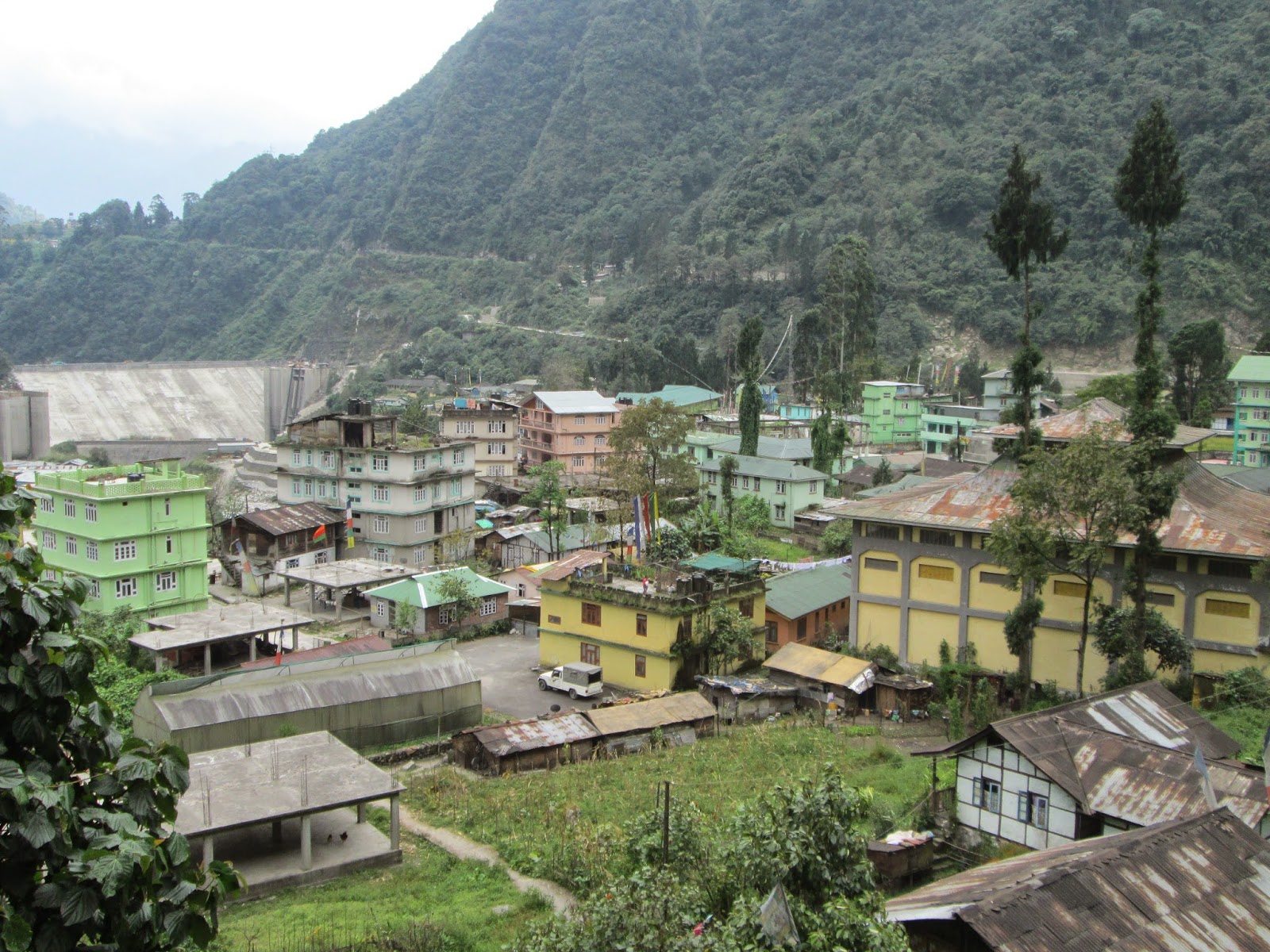
All in the name of Development! This dam Dam will erase the memory of Chuntang, a small town at North Sikkim, forever! Is it a crime that their habitat is situated at the confluence of two rivers- Lachen River and Lachung River? People are protesting but who cares